
Unique Research · September 2026 AI Funding Review · October 16, 2026
Most companies received “bread-and-butter money” in the tens to hundreds of millions; a handful of leaders took single rounds worth tens of billions.
Data note: This review is compiled from public reporting of 542 AI funding events worldwide in September 2026. Of these, 382 disclosed specific amounts, which total approximately RMB 410.9 billion converted at RMB 6.72 per USD. Amounts follow public-reporting conventions. This article is industry information and observation only, and does not constitute investment advice.
Since the start of this year, Unique Research has been continuously recording public AI funding activity around the world, entering each round’s company, stage, amount, investors, and sector into a database month by month. By the end of September, the database held more than 4,000 funding events accumulated over nine months.
Until now, this data was used mainly for internal research and was not published systematically. Starting this month, we have decided to publish a monthly review — this is the first edition. We will update it monthly, and publish more complete quarterly and annual reports at the end of each quarter and year.
A look at the nine-month arc — the change in monthly funding-event counts: activity climbed steadily month over month, from 312 events in January to three consecutive months above 540 in Q3. September closed the quarter with 542 events.
Now let’s look at where September’s money actually went.
If you compress the September 2026 global AI funding market into three numbers:
542 funding events — about 18 per day. For any industry, that disclosure frequency is not low. AI remains the most crowded lane in global private markets.
Approximately RMB 410.9 billion in disclosed total value. This counts only events with disclosed amounts; the real total is certainly larger.
8 “ten-billion-class” rounds. Eight transactions above RMB 10 billion each totaled about RMB 177.7 billion — 43% of the month’s total.
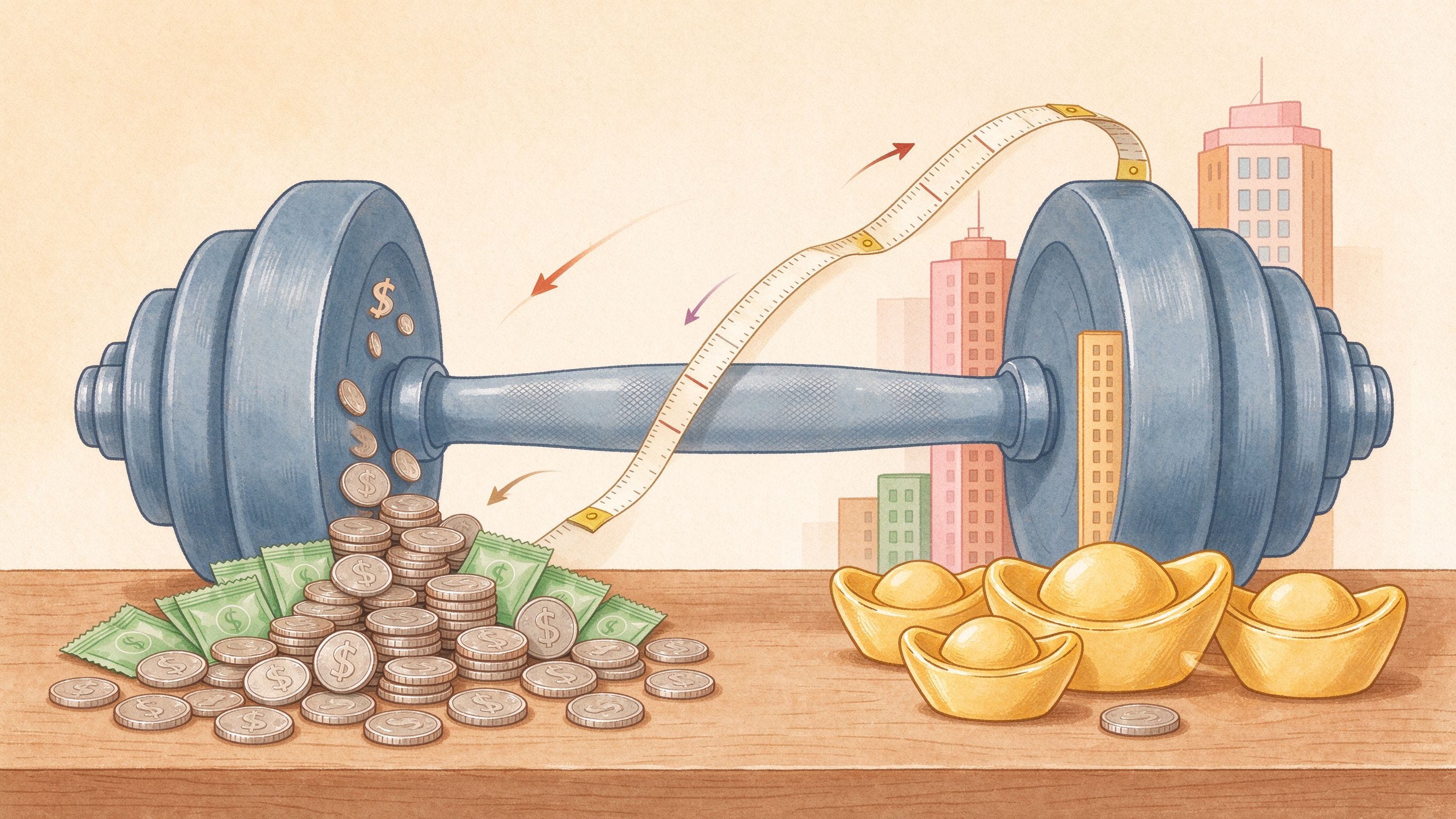
Together, these three numbers frame the month’s core picture: event density is extremely high, but the distribution of money is extremely uneven. Most companies got “bread-and-butter money” in the tens to hundreds of millions; a few leaders took single rounds worth tens of billions. The market does not look like a pyramid — it looks like a dumbbell, thick at both ends and thin in the middle.
By geography: China led with 326 events — 60% of the month — making it the most active AI funding market in the world. But its disclosed total of about RMB 96.1 billion was just 23% of the global figure. The United States was the mirror image: 106 events, less than a third of China’s count, yet close to RMB 169.7 billion in total value, with an average round roughly five times China’s.
Europe, Israel, Australia and other regions combined for 110 events and about RMB 145.1 billion — and produced a disproportionate share of the month’s mega-rounds: Mistral’s EUR 3 billion Series D, Nscale’s USD 3.36 billion pre-IPO round, UK drone maker TEKEVER’s USD 580 million Series D, and Australian medical-AI company Heidi Health’s combined USD 340 million financing. European AI funding shows a clear “state-champion” character: large single rounds, later stages, domestic institutions clustering together.
In one sentence: China’s market is “high-frequency, small-ticket, early-stage,” while overseas markets are “low-frequency, mega-value, later-stage.” This is not about which market is hot or cold — it is a direct mapping of where the two AI industries stand and how their capital structures differ. That shows up even more clearly in the stage data below.
Segmenting the 382 disclosed-value events by deal size reveals the dumbbell. On the left (by count): the RMB 10 million–100 million and RMB 100 million–1 billion bands together held 276 events — 70% of all disclosed-value events. This is the market’s base layer, where large numbers of early-stage and vertical-application companies were raising. On the right (by value): only 83 rounds were above RMB 1 billion each, yet they took RMB 354 billion — 86% of the total. Within that, the 8 rounds above RMB 10 billion each totaled RMB 177.7 billion.
The single-round Top 10 list makes the concentration even clearer, and it is worth reading closely because it is almost this month’s “map of power”:
Top 10 rounds by size · September 2026
Z.AI (Zhipu) — ~RMB 33.6 billion. The month’s largest. In mid-September, Zhipu raised roughly USD 5 billion through a combination of H-share placement and convertible bonds — convertible principal of about RMB 20.14 billion plus H-share placement of about HKD 15.68 billion. A Chinese foundation-model company using this “equity plus debt” capital-markets toolkit is itself a signal: the funding needs of leading model companies have begun to outgrow the comfort zone of traditional private equity.
CoreWeave — ~RMB 28.2 billion (USD 4.2 billion in debt). Note: this is not equity; it is debt issuance. The AI-compute-rental giant is expanding data centers with borrowed money — a sign that the business’s cash-flow model is mature enough to support leverage, or that capital markets now price it as infrastructure rather than a startup.
Crusoe — ~RMB 26.2 billion (USD 3.9 billion Series F). Also betting on AI data centers; valuation reached USD 30.9 billion.
Mistral — ~RMB 23.4 billion (EUR 3 billion Series D). The “last man standing” of European foundation models; the round set a European record and showed strong local-institution clustering.
Nscale — ~RMB 22.6 billion (USD 3.36 billion pre-IPO convertible notes). Compute again, and debt-like instruments again; USD 1 billion came from Nvidia’s committed participation. Chipmakers using capital ties to lock in compute customers — this kind of “supply-chain investment” appeared more than once in September.
The Boring Company — ~RMB 20.2 billion (USD 3 billion Series D). Musk’s tunneling company is not strictly an AI company, but its automation and robotics profile keeps it inside the AI capital narrative.
Cognition — ~RMB 13.4 billion (over USD 2 billion Series E). The star AI-coding-agent company, valued at USD 48 billion, also disclosed ARR above USD 900 million. An application-layer company entering the ten-billion club on revenue data, not narrative.
Fluidstack — ~RMB 10.1 billion. A UK GPU-cloud provider. Compute again.
Motive — ~RMB 8.7 billion (over USD 1.3 billion growth financing). A freight-management AI company with ARR above USD 600 million. The money came from General Catalyst’s Customer Value Fund, not a traditional equity round — a detail we return to in section four.
Instinct — ~RMB 6.7 billion (USD 1 billion Series C). A personal-agent company; media reported a USD 10 billion valuation.
The Top 10 together totaled about RMB 193.2 billion — 47% of the month’s total. Nearly half of all global AI funding in September flowed into ten companies.
Across the month’s stage mix: 106 seed/angel rounds, 98 pre-A/A rounds, and 225 equity/strategic investments with undisclosed stages — these three categories together made up nearly 80% of all events. The structure is even more extreme in China: seed/angel, pre-A/A, and undisclosed-stage equity investments accounted for 287 of China’s 326 events — 88%. China had only 19 rounds at Series C or later.
Where did this early money go? The sector distribution answers that.
Embodied AI / robotics ranked first with 87 events, 79 of them in China. The sector totaled about RMB 14 billion, with most rounds small — a classic “spread bets” phase: the industry has not yet produced an absolute leader that needs enormous capital, so investors are buying entry tickets across the board with many small checks. Representative deals: robotics-chip maker Dijia Robot (地瓜机器人) closed a USD 400 million Series C with Linear Capital adding for the seventh consecutive round, with cumulative chip shipments passing 8 million units; embodied-AI full-stack developer Chaowei Power (超维动力) raised RMB 500 million in an angel round led by Vertex Ventures; “flying embodied brain” company Weifen Zhifei (微分智飞) completed a several-hundred-million RMB A2 round; general-robotics company Sudu Tech (苏度科技) closed over RMB 1 billion in financing on the last day of September; and VAST completed a combined B and B+ round of about RMB 3 billion led by Matrix Partners, bringing its six-month cumulative raise to roughly RMB 5 billion. Within the “spread bets” backdrop, a few niches have already started seeing big adds.
Compute / chips / data centers led by value with 56 events and about RMB 135.2 billion — a sharp contrast with embodied AI: one wins on count, the other on scale. Half of the month’s Top 10 by value were compute-related. The logic of this sector is no longer “startup financing” but “infrastructure financing.”
AI healthcare / biotech was the most balanced sector: 56 events and about RMB 25.4 billion. Two deals stood out: surgical-robotics company Cornerstone Robotics (康诺思腾) signed a strategic investment and distribution agreement with medical-device giant Medtronic worth about USD 700 million in total, while Australia’s Heidi Health, on the same day, completed a USD 100 million Series C plus USD 240 million in Customer Value Fund growth financing. Mixing equity, industrial partnerships, and revenue-based financing — medical-AI funding structures are getting complex.
Large models / foundation models recorded 33 events and about RMB 33.2 billion — not many rounds, but Zhipu and Mistral alone carried most of the value. Foundation-model funding is now fully winner-concentrated. Two other events are worth noting: foundation-model company Emulate’s seed round reached USD 700 million, raising the seed-stage ceiling again; and Nvidia announced a roughly USD 12.9 billion acquisition of Hugging Face, pending regulatory approval — if it lands, it would be the deepest binding yet between the open-source model community and a compute giant.
AI agents / enterprise applications logged 51 events and about RMB 21.2 billion, spread across legal, sales, recruiting, finance, and customer service. Legal-AI company Harvey raised USD 550 million at a USD 15.5 billion valuation; sales-AI company Clay completed a USD 115 million Series D at a USD 7.1 billion valuation serving more than 17,000 customers; AI recruiting platform Metaview completed a USD 60 million Series C. The common thread: the companies raising big money are all disclosing customer counts and revenue data.
One more detail worth flagging: in the investor lists for Chinese events, state-backed institutions appeared at least 30 times. Shanghai Guotou Pioneer (上海国投先导), Guotai Haitong (国泰海通), Shenzhen Capital Group (深创投), and various regional industry funds frequently appeared as lead or co-lead investors — including Suda Tech’s RMB 1 billion-plus round, co-led by Shanghai Guotou Pioneer, Guotai Haitong, and Futeng Capital. State capital’s presence in “hard-tech” directions like embodied AI and foundation models is one of the most distinctive structural features of this month’s China data.
Beyond “how much” and “to whom,” September’s data has a less obvious but information-dense dimension: the form in which money entered. Traditional startup financing sells equity. This month’s large deals showed at least five “non-standard” forms — debt, convertibles, Customer Value Funds, and secondary sales among them.
One fresher form deserves its own note: the Customer Value Fund. Motive’s USD 1.3 billion-plus and Heidi Health’s USD 240 million both came from this kind of fund — it does not aim at equity but provides capital around a company’s revenue growth, closer in nature to “financing against future revenue.” At least three big deals in a single month used this structure; it is moving from financial innovation to a regular option.
Employee secondary offerings also appeared: ElevenLabs completed a USD 300 million employee stock sale that doubled its valuation to USD 22 billion, letting employees cash in before an IPO.
Put together, the trend is clear: funding for leading AI companies is “capital-markets-izing.” When a single round needs billions of dollars, pure private equity can no longer carry it alone, and companies begin combining debt, convertibles, and placements — tools once reserved for mature companies. This is both a result of scale and a new demand on revenue quality: debt must be repaid, and both the willingness to issue it and the confidence to buy it rest on cash-flow expectations. Secondary sales point to another reality: a cohort of AI companies founded in 2020–2023 has seen valuations rise through several rounds while the IPO window remains largely shut, so employees and early shareholders are releasing their liquidity needs this way.
One more group in this month’s big-deal list deserves its own bucket: companies that are not “AI companies” in the usual sense, but raised money for reasons tied to AI.
In defense: US-based Mach Industries closed a USD 600 million Series C extension to build AI-driven autonomous defense systems; UK-based TEKEVER completed a USD 580 million Series D for AI autonomous drone systems at a USD 6.4 billion valuation.
In space: fully reusable rocket company Stoke Space closed the first tranche of a USD 1 billion Series E; space-pharma company Varda Space Industries completed a USD 251 million Series D for in-orbit drug crystallization manufacturing.
These deals say one thing: the boundary of “AI funding” is blurring. As autonomous systems become core to defense and aerospace, funding in those domains is increasingly counted inside the AI capital narrative. Conversely, how big the AI funding pool is depends more and more on how you draw the circle.
By pacing, September’s funding events rose week over week, with 193 events in the last nine days of the month — 36% of the total. On value, two peaks appeared in the second and final weeks, driven by the mega-rounds (Zhipu, Mistral, Crusoe) and end-of-month disclosure clusters.
But inside the overall heat, a few records read at a different temperature and deserve separate mention.
First, an IPO priced below expectations. Data-center infrastructure company Accelevation raised USD 540 million in its September 30 US IPO at USD 18 per share, below the USD 20–24 marketing range. The listing was widely read as the trial balloon for the “AI infrastructure listing wave,” and what it tested showed public markets pricing AI concepts more cautiously than private markets.
Second, the gap between rumor and reality. Several unclosed mega-funding rumors circulated publicly this month — including a USD 30 billion new round for a leading foundation-model company and a USD 7.5 billion second round for an AGI company. We excluded all of them because they had not closed by the end of September. The distance between rumored and closed amounts is itself a measure of market sentiment.
Third, valuations and revenue are increasingly disclosed together. Cognition disclosed ARR above USD 900 million when it raised USD 2 billion; EliseAI disclosed ARR above USD 200 million when it raised USD 350 million; GMI Cloud disclosed contracted annualized revenue above USD 600 million; workflow-software company Temporal disclosed an annualized revenue run rate above USD 250 million, up more than 200% year over year, when it raised USD 550 million. Revenue data attached to funding news is becoming the norm — the market is demanding revenue as evidence for valuation, and pure-narrative financing got noticeably rarer this month.
Summarizing the September 2026 AI funding market in three sentences:
First, the total is still astonishing, but the structure is highly concentrated. In a pool of 542 events and over RMB 410 billion, 83 ten-billion-class deals took 86% of the money, and the Top 10 took nearly half.
Second, compute and leading foundation models are where the money ends up; embodied AI is where the events are. The former sees single rounds of RMB 10 billion-plus and capital-markets-ized forms; the latter logged 87 events, 79 of them in China, small and dense, with state capital active.
Third, China and the US are living in different time zones. China’s market — 88% early-stage and small equity investments — is telling a “seeding” story; overseas mega-rounds concentrated at Series C and beyond with alternative instruments tell a “betting up before the harvest” story.
How long this dumbbell structure lasts depends on two things: whether early-stage companies can grow revenue that justifies later-stage valuations, and whether public-market pricing of AI assets converges with private markets. September’s data does not answer the question — but it gives plenty of clues. We will keep tracking in October’s review.